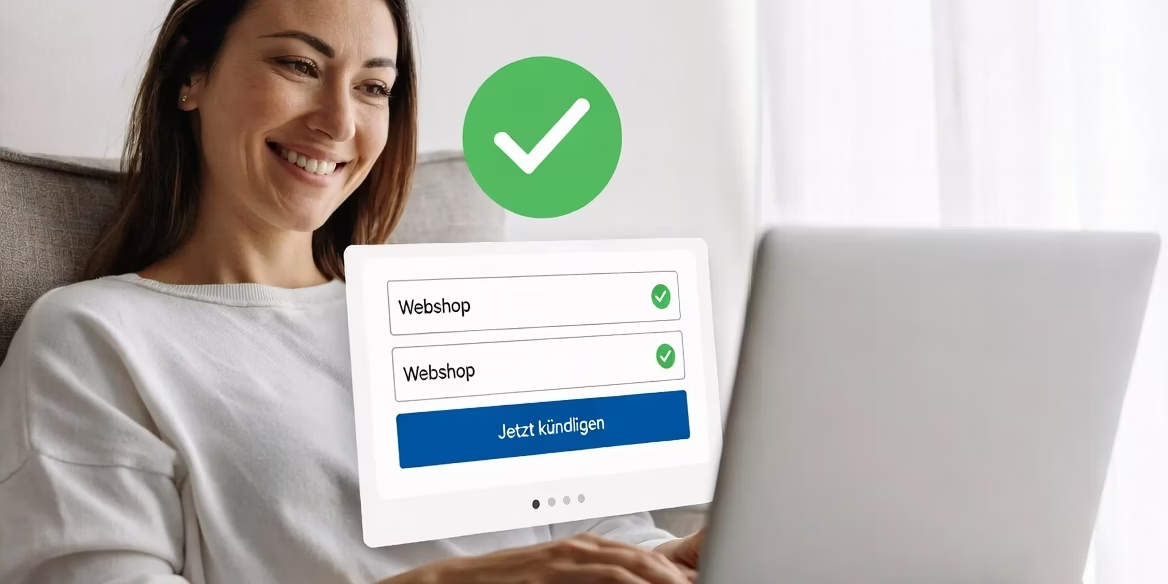
If you are dealing with cancellation buttons, withdrawal rights or GDPR requirements, you will quickly notice that many requirements can only be addressed in existing systems through additional tools or workarounds.
In practice, Lightspeed C-Series in particular can present limitations.
A well-planned platform change can often be the better long-term solution, provided the migration is carefully considered.
What is possible today
Moving to Shopify from Lightspeed C-Series or Shopware no longer means starting from scratch.
With the right tools and processes, existing data can be improved as well as transferred.
Customer migration with meaningful quality checks
Instead of blindly transferring every customer record, we work with a structured export list.
The client receives a clear recommendation for each record, highlighting issues such as:
- A customer who has been inactive for a long time
- A customer who has never placed an order
- Duplicates or unclear records
This supports targeted decisions about which data should be transferred in compliance with the GDPR and which should deliberately be left behind.
The result is a cleaner, more focused customer database rather than a collection of unresolved data problems.
Automatically clean up product data
A common problem in established stores is broken content: nested formatting, unnecessary code from rich text editors or structures that have accumulated over the years.
These issues can be cleaned up automatically during migration.
This improves:
- Loading times
- SEO structure
- Readability and maintainability
without the same amount of manual cleanup.
Review privacy when embedding YouTube videos
Embedded videos are an often overlooked part of a migration.
Standard YouTube embeds can use cookies, so the way videos are loaded needs to be considered as part of the consent setup.
During migration, embeds can be switched to YouTube’s privacy-enhanced versions.
This is a useful technical improvement, but privacy-enhanced mode alone does not establish that consent is unnecessary. The complete implementation, including data transfers and any required consent before loading, still needs to be reviewed.
Conclusion
A platform change is more than a technical move.
It is an opportunity to clean up data, improve processes and address legal requirements properly.
Particularly when considered alongside cancellation processes and GDPR requirements, a carefully planned migration can reduce time, risk and ongoing complexity.