The way people discover products online is changing fundamentally.
Until now, most purchasing journeys have involved:
- Google searches
- Traditional online stores
- Social media ads
- Marketplaces such as Amazon
A new layer is now emerging: AI-powered commerce systems.
These include:
- AI assistants
- Intelligent product recommendations
- So-called agentic storefronts
- Automated purchasing processes
- AI-powered product searches and comparisons
This is an area in which Shopify is positioning itself particularly strongly.
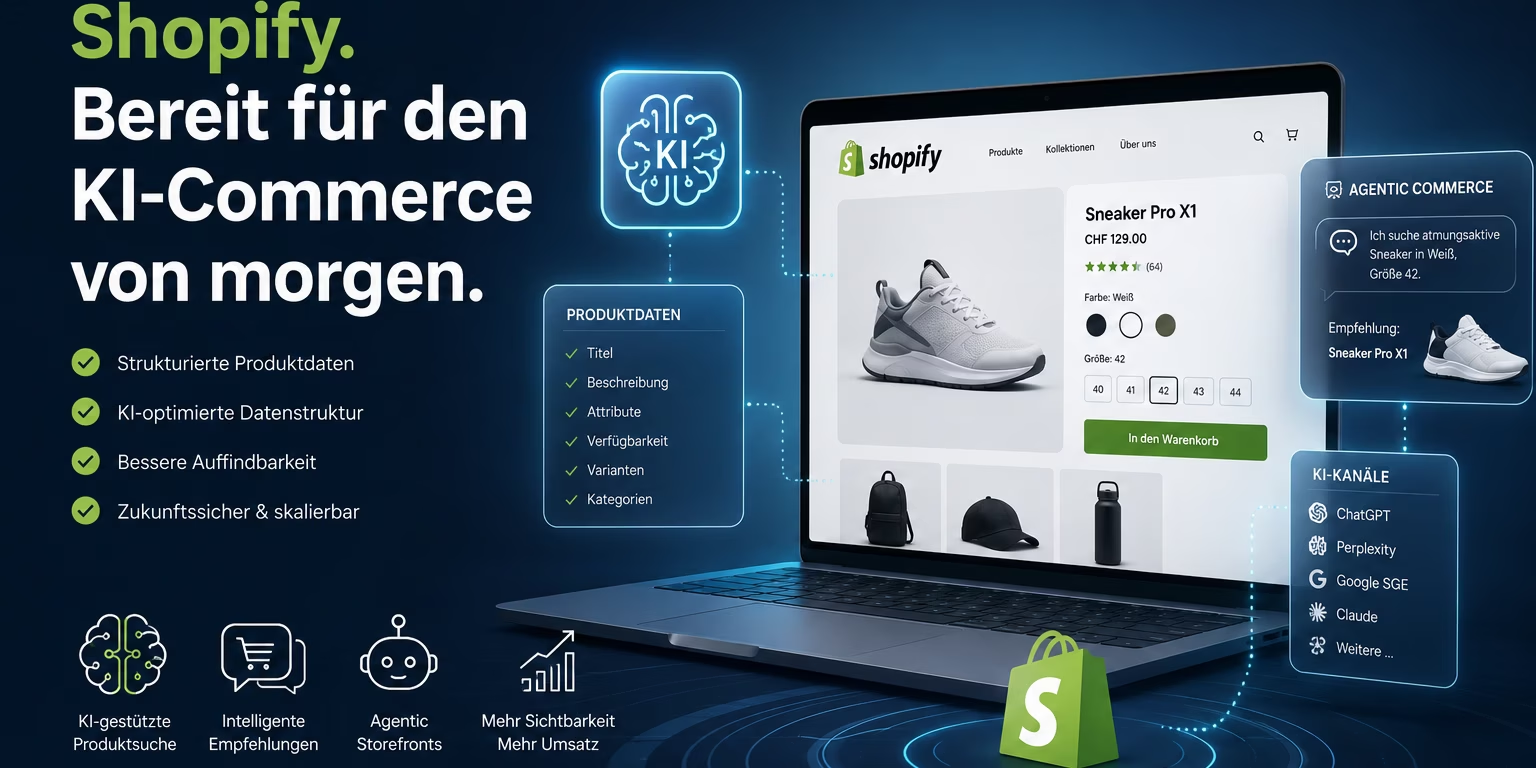
New developments around Shopify Catalog and Agentic Storefronts clearly indicate the direction of modern e-commerce: products should not only be discoverable by people, but also understandable, assessable and recommendable by AI systems.
Why structured product data is becoming so important
When retailers think about AI, chatbots and automatically generated copy often come to mind first.
But the greater opportunity lies elsewhere:
AI needs structured, clean and up-to-date product data.
AI systems need to understand:
- Exactly what a product is
- Which attributes it has
- Which variants exist
- Which products work together
- Which information is current
- Whether a product is available
- Which audience it serves
This is where significant differences are emerging between modern and older store systems.
Shopify already has a strong technical foundation for AI
Compared with many traditional store systems, Shopify has several important advantages:
- A strong API architecture
- Central product data management
- Standardised product information
- A modern metafield architecture
- Powerful feed systems
- High performance
- Extensive integration options
- Strong partnerships in the AI sector
Shopify already structures product data in ways that make it easier to use across modern AI channels.
This is developing beyond a short-term trend into a technical foundation for the future of online retail.
Where older store systems often reach their limits
Many older store systems were not originally designed for AI-powered commerce processes.
This often affects:
- Older Lightspeed setups
- Store solutions that have grown organically over time
- Highly customised legacy systems
- Complex in-house developments
Typical challenges include:
- Inconsistent product data
- Missing structure
- Limited API capabilities
- Outdated feed logic
- Limited scalability
- Data that is difficult for AI to interpret
For larger product datasets and complex catalogues in particular, this is increasingly becoming a strategic disadvantage.
Why this matters to retailers now
Many businesses still underestimate how much product discovery will change in the coming years.
AI systems will increasingly:
- Actively recommend products
- Support purchasing decisions
- Compare products
- Interpret search queries
- Personalise product recommendations
- In some cases, initiate purchases directly
A sound technical setup therefore becomes an important factor in visibility.
That is why the quality of product data is gaining so much importance.
A Shopify migration is more than a design upgrade
When considering a platform change, retailers often think first about:
- A new design
- Better performance
- Easier operation
These things matter, but there is now much more at stake.
A modern Shopify store provides a technical foundation for:
- AI commerce
- Better discoverability
- Scalable product feeds
- Modern SEO structures
- Intelligent product recommendations
- Future AI integrations
Businesses using older store systems should therefore assess whether their current technical foundation can support their long-term needs.
Our AI and agentic commerce readiness package
We help retailers prepare the technical setup and structure of their stores for the next generation of e-commerce.
Analysis and structure
- Product data analysis
- Correction of faulty product data
- Structuring categories and product types
- Variant optimisation
Shopify and feed optimisation
- Product feed optimisation
- Google Merchant optimisation
- Structured metafield strategies
- A data structure that AI can interpret
SEO and visibility
- Semantically clear product copy
- Structured FAQ sections
- Schema.org optimisation
- Technical SEO improvements
Migration and future readiness
- Migration from Lightspeed or other store systems
- URL transitions planned with SEO in mind
- Data transfer
- Technical support
- Performance optimisation
Conclusion
The coming years in e-commerce will not be decided by better design alone.
A key question will be: How well can AI systems understand a store technically?
Shopify is building a strong foundation for this.
Businesses that modernise their product data, feed structures and store architecture are strengthening their SEO foundations while preparing for the next stage of online retail.
Would you like an assessment of your store?
We can analyse how well your existing store is prepared for modern AI commerce and which technical or strategic steps would make sense.